
Managed IT vs. Break-Fix IT: Which Actually Costs Less Over a Year?
Ask any Central Florida business owner how much their IT costs them, and you get a shrug. That is the problem. When your IT bill is a surprise every month from a break-fix shop that only shows up after things break, you have already paid the most expensive price there is: downtime.
Here is the honest question this article answers: over a full 12 months, does a flat-rate managed IT plan from a provider like Ascend Technologies really cost less than paying for repairs as they happen?
What break-fix IT actually is
Break-fix is simple: your network goes down, you call a technician, they come fix it, and they hand you an invoice. No contract. No monthly fee. Sounds cheap until you look closer.
The catch is baked in. Because the provider makes no money when things are running smoothly, there is zero incentive to proactively watch your systems, patch your software, or replace aging gear before it dies. The wait-and-see model quietly transfers every risk onto your business.
What managed IT is and how the pricing differs
Managed IT runs on a flat monthly rate per user or per device. For one predictable number each month, a provider like Ascend Technologies monitors your network around the clock, patches software, backs up data, runs help desk support, and manages your Office 365, cloud services, and even VoIP and security cameras.
The key difference is the business model. With break-fix, your provider only reacts. With managed IT, your provider stays ahead of problems so most of them never become an emergency in the first place.
The downtime you do not price into a break-fix bill
Here is where the comparison usually tips over. When your network goes down for half a day, the invoice from the technician is the tiny part of the cost. The real money walks out when every employee stops working.
Let's run a quick scenario. A ten-person shop in Winter Haven loses the whole afternoon to a server issue. With average wages mixed in, that is several hundred dollars in lost productivity from just one afternoon. Over a year, a few of those events and the downtime alone can quietly outspend an entire managed IT contract before you ever sign a check for a repair.
Flat-rate managed IT is built to prevent downtime, not just fix it. The monitoring catches small faults before they take the network down, and when a real emergency does happen, the goal is to get you back in business and recovered in hours, not days.
The hidden costs no one quotes up front
Break-fix pricing looks cheaper on paper for one dishonest reason: you only see the fix, not the setup. There are the incident fees for "after hours," the hourly rates that jump for emergencies, and the cost of a repeat call when the same problem comes back a week later because there was no time to fix it properly the first time. And when you need something fixed, you're often getting a technician who only knows their narrow track.
Then there's the vendor shuffle. A typical small business juggles one company for servers, another for internet, another for phones, another for security cameras. When something goes wrong and the blame starts flying between providers, no single vendor owns the problem. That finger-pointing is expensive in hours and frustration. In fair contrast, a single managed IT partner takes accountability for the whole stack, so you have one number to call and a team that makes it right.
What the 12-month ledger math looks like
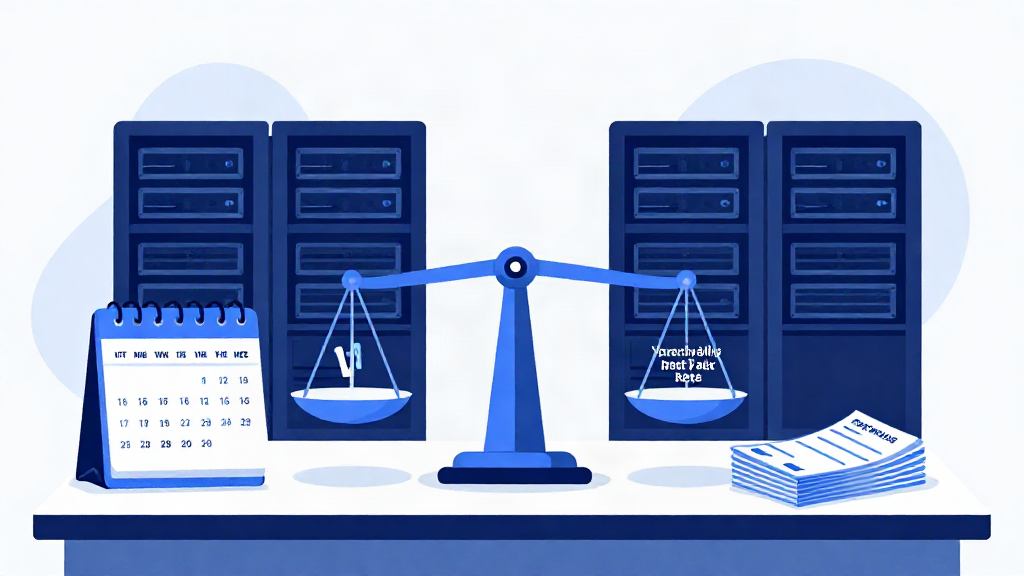
To make the comparison concrete, let's put a modest monthly managed IT agreement next to a break-fix approach over a full year.
Say an SMB's flat-rate managed plan comes out to a set monthly amount, and break-fix charges a few hours at a fair hourly rate. On a quiet month, break-fix may win: a small invoice beats a monthly fee when nothing breaks.
But a year rarely stays quiet. A single unmanaged incident — one big network outage, a ransomware hit, one server migration — can eat a whole flat-rate month's budget in a few days. Stack a help-desk ticket or two across a year and the hourly catch-up grows. So the real contest is not the headline rate: it's predictability over twelve months.
Forecast the year: managed IT is a known number you can lock into your budget today and defend to your accountant. Break-fix is a wide range that can swing high depending on how the network behaves. For a business that wants steady bills and no surprise checks, the flat rate wins on finance even before you count the downtime you will avoid.
Why predictable billing wins for an SMB
At the end of the year, the lowest-cost option is almost never the one with the cheaper hourly rate. The one that wins on cost is the one that keeps you productive, prevents emergencies, and gives you one predictable number every month.
At Ascend Technologies, we hear from business owners across Central Florida who are exhausted by unpredictable IT bills, slow help desk tickets, and aging gear that fails at the worst moment. That's why our flat-rate, local partner approach exists: a Central FL based team, enterprise-grade tools, and straight talk. You know exactly what IT costs you per month. When you call the help desk, it's a human here in the corridor, not a call center on the other side of the world.
The takeaway
So, managed IT or break-fix — which one actually costs less over a year? In short: managed IT. Especially when you add downtime, hidden fees, and the real cost of multi-vendor headaches.
If you run a company with roughly 10 to 100 employees and you want to stop guessing what IT will cost you next month, talk to Ascend Technologies about a flat-rate managed IT plan. Recover in hours, not days, and keep a single accountable partner on the job. The first conversation is free, and the answer is usually simpler than you think.